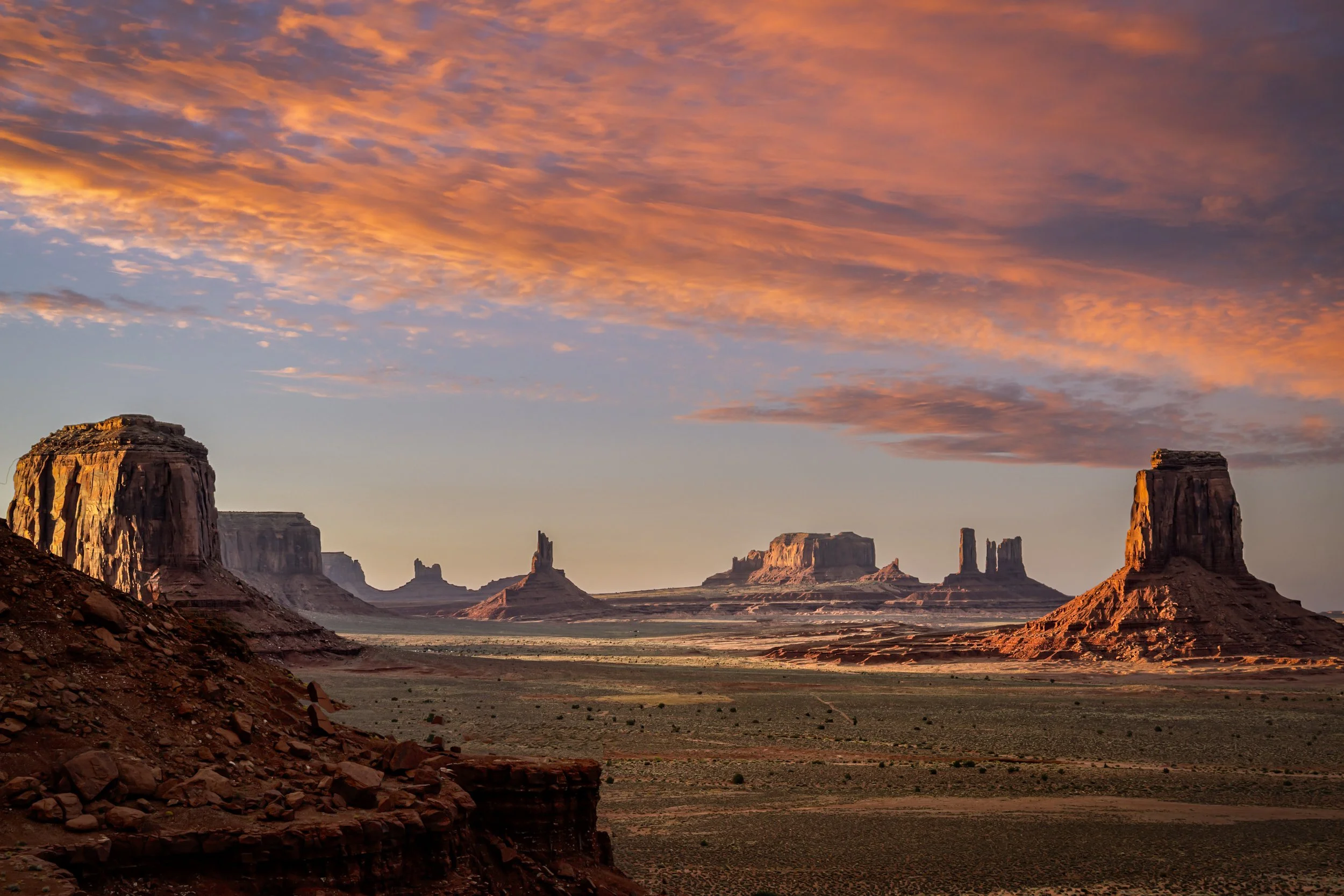
Few places look as familiar before you've ever been there. The sandstone buttes of Monument Valley have filled Western films, car commercials and calendar pages for nearly a century. Then you arrive, the sun comes up behind the Mittens, and it's better than every picture you've seen. Here's how to make the most of it.
First, where you are
Monument Valley isn't a national park. It's Monument Valley Navajo Tribal Park, managed by the Navajo Nation on land where families still live and work. That changes how you visit: national park passes aren't accepted, much of the valley is open only with a licensed Navajo guide, and photographing people or homes requires permission. Treat it as what it is: a home, and a sacred landscape, as well as a view.
When to go
My favorite time to go is spring, while it’s still a bit cold. The mornings are crisp, the air is clear, and best of all, the crowds haven’t arrived yet. More than once I had a view all to myself that, a few months later, I’d be sharing with tour buses. Pack layers: a pre-dawn desert morning in spring can be far colder than you’d expect.
I’ve also been in the warmer months, and it’s a very different trip. Summer runs hot, into the mid-90s°F in July and August, and the crowds are a very real thing, at the overlooks and on the Valley Drive. The upside is the monsoon season, when afternoon storms can bring some truly dramatic skies. Fall offers a lot of what spring does: mild days and clear air. Winter is cold and windy, but quiet, and a dusting of snow on red rock is unforgettable.
If you can, go in spring. Bring a warm jacket and a thermos, and you’ll have the light (and the valley) almost to yourself.
Basecamp: The View
The View is the only lodging inside the park, with a hotel and a campground that look straight out at the Mittens. It's the one place where sunrise comes to you: the sky brightens behind the buttes while you're still at your door. I camped here, and it's one of my five favorite places to sleep close to the light. Goulding's Lodge, a few miles west, is the other classic option.
The spots
| Spot | Light | Access |
|---|---|---|
| The Mittens from The View | Sunrise | From the hotel, campground and visitor center |
| John Ford's Point | SunsetLate afternoon | Valley Drive |
| Artist's Point | Late afternoon | Valley Drive |
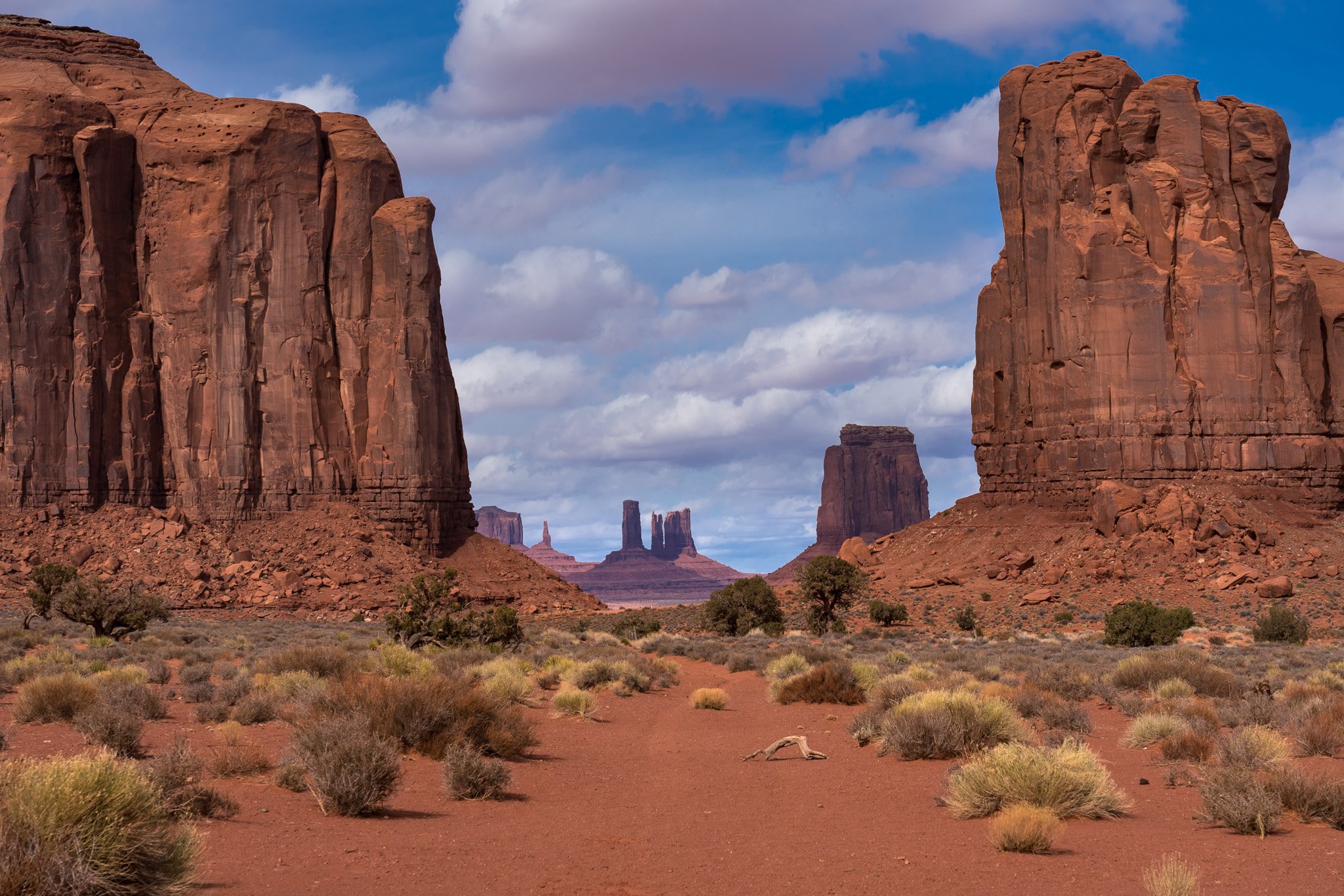
| North Window | Late afternoonSunset | Valley Drive |
| Totem Pole and Yei Bi Chei | SunriseSunset | Deep in the valley Guided tour only |
| Forrest Gump Point, US-163 | MorningAfternoon | Public highway, north of the park |
The Mittens from The View (sunrise). The classic. East and West Mitten Buttes and Merrick Butte stand in silhouette as the sky lights up behind them. Arrive early and claim your spot along the overlook.
John Ford's Point (sunset). Named for the director who made the valley famous, this point looks out over the open desert floor. Late light rakes across the buttes and the long shadows stretch toward you.
Artist's Point and North Window (late afternoon). Both open up wide, layered views across the valley, and they're at their best as the light warms toward evening.
Totem Pole and Yei Bi Chei (guided only). These slender spires sit deep in the valley, beyond the self-drive loop. Book a guided tour to reach them, ideally a sunrise or sunset photography tour.
Forrest Gump Point (US-163). The famous long, straight road leading to the buttes on the horizon, a few miles north of the park in Utah. It's a public highway with real traffic, so shoot from the shoulder, keep an eye out, and never stand in the road.
Before you go
Check the drive hours. The 17-mile Valley Drive is open daytime hours that change with the season, so true sunrise and sunset in the valley usually mean a guided tour. Sunrise from The View needs no tour.
Bring the right vehicle. The Valley Drive is dirt, gravel and rock, often with deep sand. A high-clearance vehicle is recommended, and RVs, camper vans and motorcycles aren't allowed on it.
Ask before you fly. Flying a drone on the Navajo Nation requires permission. Check the current rules before you bring one.
Check current fees and hours on the Navajo Nation Parks site before you go; they change from year to year.
Respect the people who live here. Ask before photographing anyone, stay on designated roads and trails, and pack out everything you bring in.
Beyond the valley
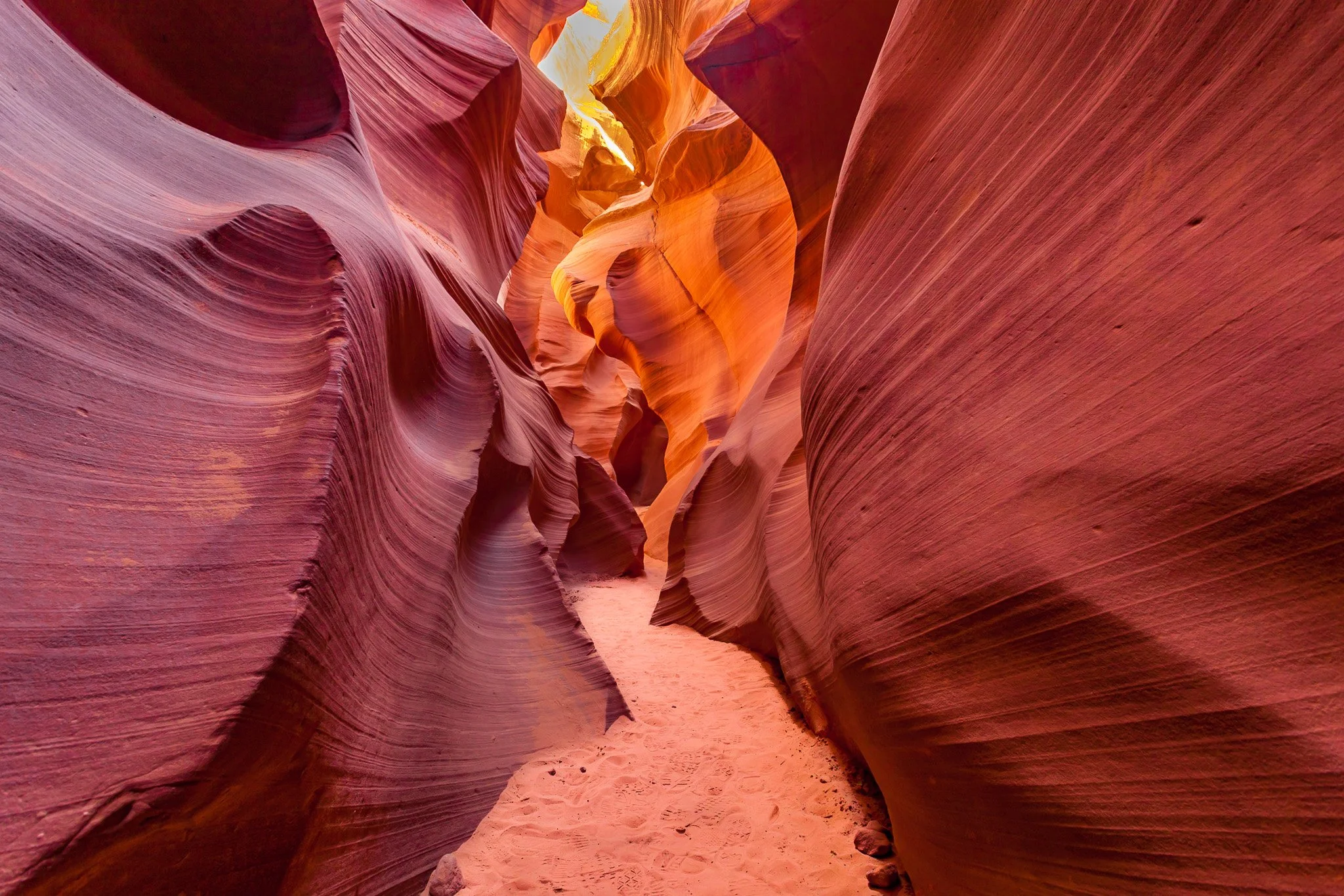
Monument Valley sits at the heart of some of the most remarkable country in the Southwest, and it's worth building in a few extra days. These are all within an easy day trip, and several are on the way in or out. Drive times are approximate.
Goosenecks State Park, Utah (about 45 minutes). The San Juan River carves a series of tight, looping bends 1,000 feet below the rim. It's a small park with a big view, and you can camp right on the edge. Go at sunset, then stay for the stars: it's a certified dark sky park.
Valley of the Gods, Utah (about 45 minutes). Often called a miniature Monument Valley, this quiet stretch of BLM land has its own sandstone buttes and spires along a 17-mile dirt road, with a fraction of the people. A high-clearance vehicle helps, especially after rain.
Moki Dugway and Muley Point, Utah (about 1 hour). The Moki Dugway climbs the face of Cedar Mesa on gravel switchbacks at an 11 percent grade. It isn't for trailers or larger RVs, but in a car it's an unforgettable drive. At the top, Muley Point looks out over the Goosenecks and all the way to Monument Valley on the horizon.
Natural Bridges National Monument, Utah (about 1.5 hours). Three massive natural stone bridges carved by water, and one of the first International Dark Sky Parks in the world. A good stop on a loop with the Moki Dugway.
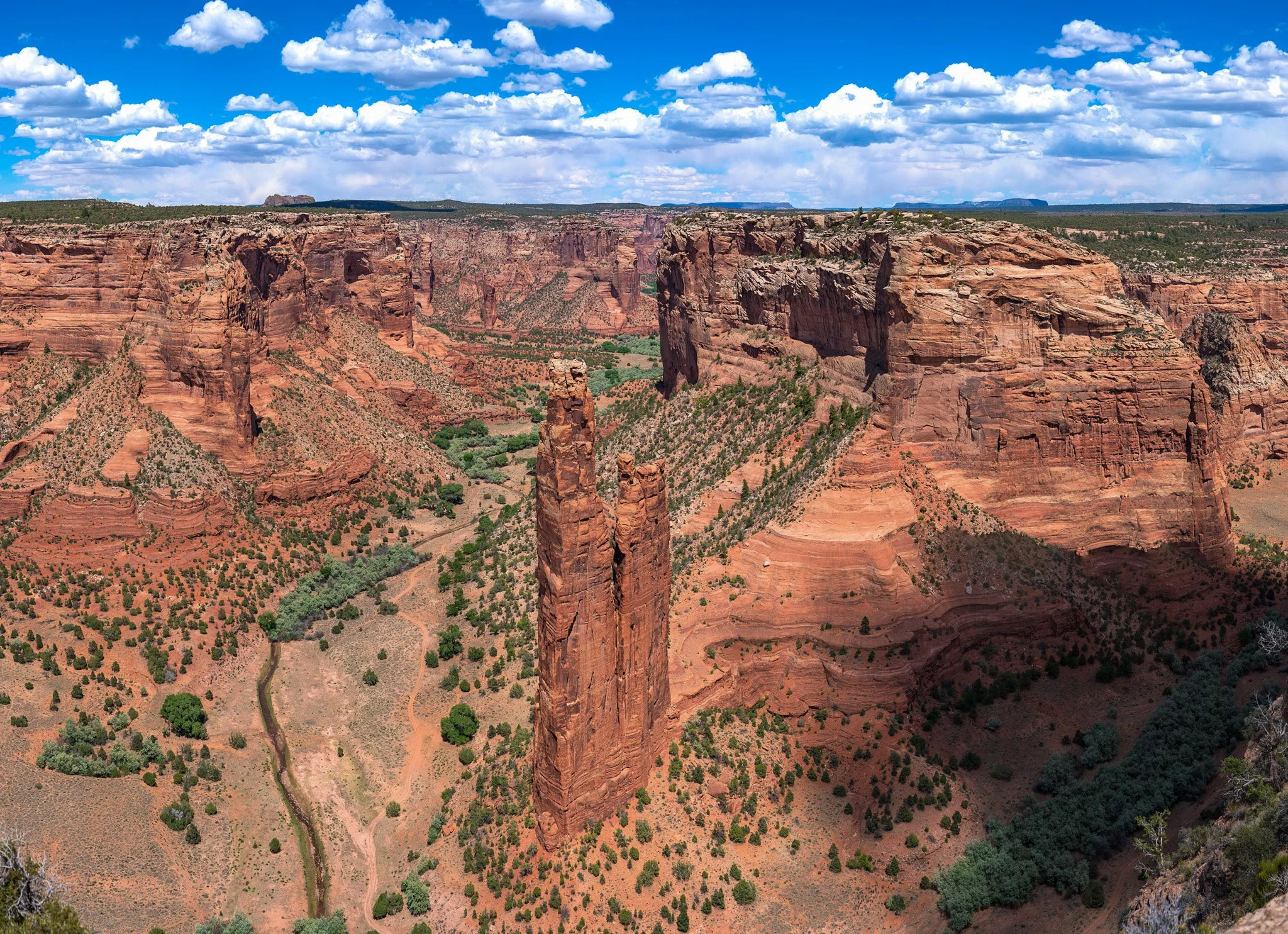
Canyon de Chelly National Monument, Arizona (about 2 hours). Sheer red canyon walls, ancient cliff dwellings and Spider Rock, an 800-foot sandstone spire. It's also where I made Desert Dreamscape. The rim drives are open to everyone; going down into the canyon requires a Navajo guide, with the exception of the White House Trail.
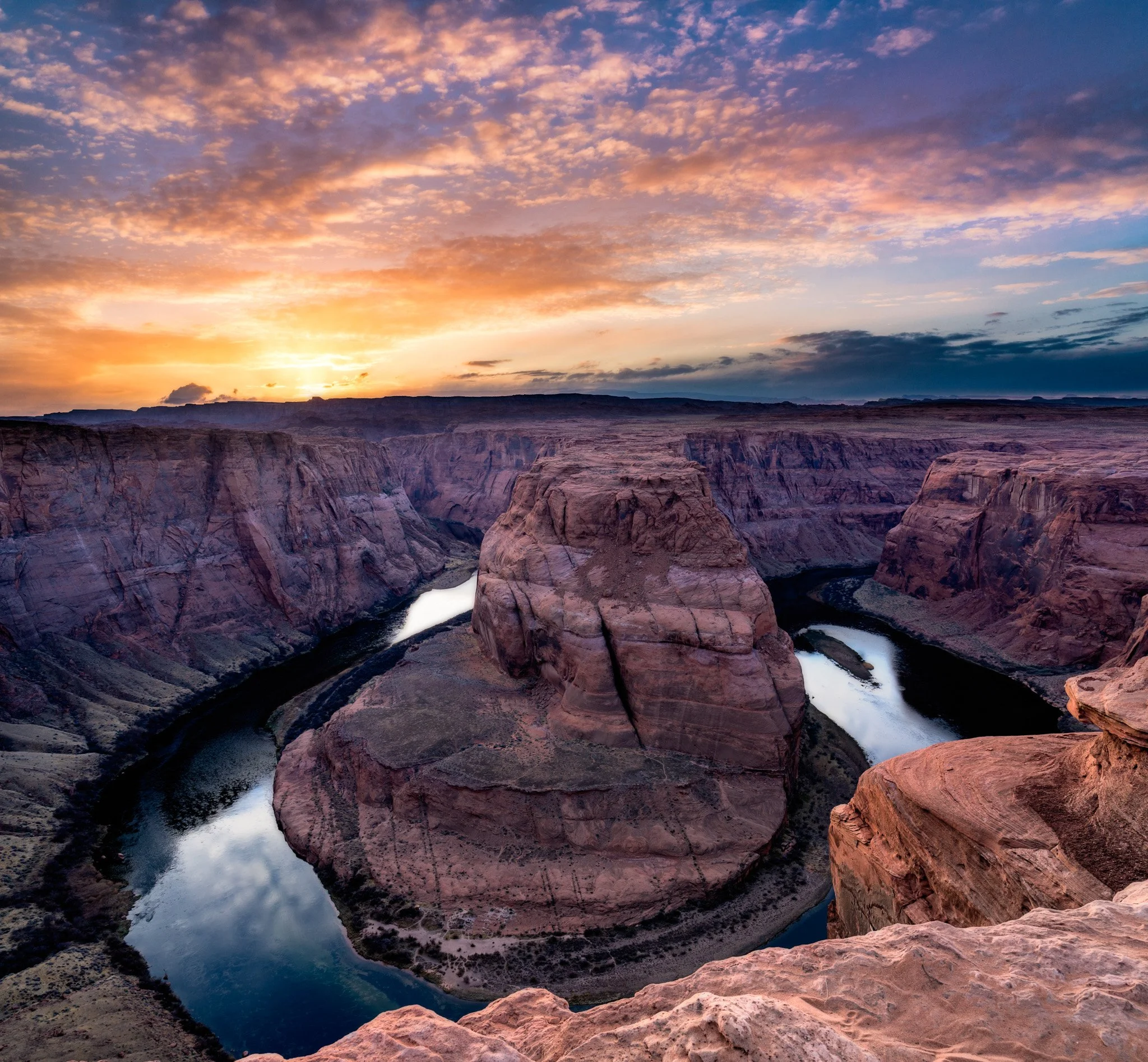
Antelope Canyon and Horseshoe Bend, Page, Arizona (about 2 hours). The slot canyons of Antelope Canyon, with their sculpted walls and beams of light, can only be visited with a Navajo guide, so book ahead. Nearby, Horseshoe Bend is a short walk to a sweeping overlook of the Colorado River. Go at sunrise to avoid the crowds.
From the Journal to the Wall
The desert Southwest has a way of staying with you. The silence before sunrise, the cold that bites on a winter morning, red rock catching the first light. It's some of the most sacred, humbling country I've ever stood in, and a few of those mornings came home with me. Each one is part of the Masterworks Limited Edition Collection, printed as an HD acrylic, signed and numbered in a limited edition of 200, and available for you to bring into your space.
Desert Dawn: a winter sunrise, when the cold, crisp air sharpens every shade of pink and orange across the desert
Desert Dreamscape: Spider Rock in Canyon de Chelly, just a couple of hours from Monument Valley
Sacred Lands: lightning from a passing storm over the Utah desert
Mesa Arch Sunrise: a frigid winter morning in Canyonlands, with the view virtually to myself
If you can't wake up to the Mittens every morning, this is the next best thing.
Explore the Masterworks Collection →